The 2026 Hurricane Season is just months away, and the WESH 2 First Warning Weather team is here to provide you with an exclusive look at what we could see. Over the last few years, we’ve worked on our own exclusive seasonal forecast to help give a preview to the upcoming season. When making the forecast, we consider several factors, and each plays a role in our final analysis. So let’s get started!Sea Surface Temperatures – La Niña or El Niño Influence on 2026 seasonDespite being thousands of miles away from parts of the Atlantic Basin, a pocket of warmer (El Niño) or cooler (La Niña) water near the equator in the Pacific Ocean can impact temperatures and upper-level winds, and in turn, tropical development.According to NOAA, as of late February 2026, a La Niña is starting to fade in the Pacific Ocean as water temperatures slowly warm. Most models that focus on La Niña and El Niño are pointing to a 50-70% chance of a neutral state at the start of hurricane season on June 1. NOAA’s forecast for peak hurricane season shows a 50%+ chance of an El Niño developing. Typically, the presence of an El Niño during hurricane season can limit or suppress tropical development. La Niña favors a more favorable environment for tropical development and potentially a more active season. However, not all hurricane seasons follow these indicators.Analog years with a similar water-temperature setup in the Pacific may provide clues for the 2026 Atlantic hurricane season. Since 1950, I have identified five cases in which consecutive ‘weaker’ La Niñas transitioned to neutral or El Niño during the following hurricane season. Storm tracks in the following neutral/El Niño hurricane season favored the southwest Atlantic, with another cluster from the northern Caribbean into the eastern Gulf.The five hurricane seasons analyzed also saw below-average tropical activity in terms of named storms, hurricanes, and major hurricanes.Weather PatternSo what makes the WESH 2 hurricane season forecast unique? We utilize a forecast method that takes into account broad weather patterns- recognizing the cycling they go through, helping us gain key insight into future potential. The weather pattern sets up in early October and continues to cycle for about the next year. So any tropical systems or low-pressure areas in the fall in the Gulf, Caribbean, or off the Southeast coast are worth keeping an eye on, as they could provide clues for the 2026 season.As the new weather pattern became established from fall (2025) into winter, a number of low-pressure areas piqued our interest in the Gulf and near/off the Southeast Coast.Studying weather patterns allows us to pinpoint potential hot spots along the U.S. coast and provide specific timeframes and locations for when and where tropical activity is possible. 2026 U.S. Hot SpotsWESH 2 has identified areas along the U.S. coast that have a higher than average chance of being directly impacted by a tropical system this hurricane season. In our analysis for the season ahead, we have highlighted two hot spots.The first hotspot stretches from parts of the Florida Panhandle to just north of Tampa. The next hotspot covers parts of the Southeast Coast, from north of Charleston, South Carolina, to the Outer Banks of North Carolina.The chance of direct impacts is lower, or closer to average, for the rest of the U.S. coastline. However, all locations need to monitor any developing tropical system. 2026 WESH 2 ForecastThe WESH 2 2026 Atlantic hurricane season forecast calls for a below-average hurricane season.9-13 named storms4-6 hurricanes1-3 major hurricanesBelow average ACEDespite the numbers above, please remember that it only takes one storm impacting your area to make the season active for you. Always be ready during hurricane season! An average hurricane season sees 14 named storms, seven hurricanes, and three major hurricanes.Coming SoonOver the next several weeks, we will add our detailed timeframes of when tropical systems may develop and track during the 2026 season. The low-pressure areas we highlighted in the current weather pattern will continue to cycle, giving us a chance to sample and better extrapolate potential timelines.The current cycle duration we have analyzed is longer than in past hurricane season forecasts. To help us provide the most accurate information, we will continue analyzing the pattern/cycle, so check back as we add this final piece of the forecast puzzle before the season starts.Accuracy CheckA question we get all the time is how accurate is the WESH 2 hurricane season forecast issued months before the official start of the season? Let’s do an accuracy check on our forecast from the 2025 season.Here is a look at the hits and misses from the 2025 forecast issued 3 months before hurricane season started.Above-average number of major hurricanes predicted ACE predicted above average Missed the number of named storms and hurricanes by 3 Landfall of only tropical system outside of forecast hot spot First Warning Weather Stay with WESH 2 online and on-air for the most accurate Central Florida weather forecast.RadarSevere Weather AlertsDownload the WESH 2 News app to get the most up-to-date weather alerts. The First Warning Weather team includes First Warning Chief Meteorologist Tony Mainolfi, Eric Burris, Marquise Meda and Cam Tran.
The 2026 Hurricane Season is just months away, and the WESH 2 First Warning Weather team is here to provide you with an exclusive look at what we could see.
Over the last few years, we’ve worked on our own exclusive seasonal forecast to help give a preview to the upcoming season.
When making the forecast, we consider several factors, and each plays a role in our final analysis. So let’s get started!
Sea Surface Temperatures – La Niña or El Niño Influence on 2026 season
Despite being thousands of miles away from parts of the Atlantic Basin, a pocket of warmer (El Niño) or cooler (La Niña) water near the equator in the Pacific Ocean can impact temperatures and upper-level winds, and in turn, tropical development.
According to NOAA, as of late February 2026, a La Niña is starting to fade in the Pacific Ocean as water temperatures slowly warm.
Most models that focus on La Niña and El Niño are pointing to a 50-70% chance of a neutral state at the start of hurricane season on June 1. NOAA’s forecast for peak hurricane season shows a 50%+ chance of an El Niño developing.
Typically, the presence of an El Niño during hurricane season can limit or suppress tropical development. La Niña favors a more favorable environment for tropical development and potentially a more active season. However, not all hurricane seasons follow these indicators.
Analog years with a similar water-temperature setup in the Pacific may provide clues for the 2026 Atlantic hurricane season. Since 1950, I have identified five cases in which consecutive ‘weaker’ La Niñas transitioned to neutral or El Niño during the following hurricane season. Storm tracks in the following neutral/El Niño hurricane season favored the southwest Atlantic, with another cluster from the northern Caribbean into the eastern Gulf.
The five hurricane seasons analyzed also saw below-average tropical activity in terms of named storms, hurricanes, and major hurricanes.
Weather Pattern
So what makes the WESH 2 hurricane season forecast unique? We utilize a forecast method that takes into account broad weather patterns- recognizing the cycling they go through, helping us gain key insight into future potential. The weather pattern sets up in early October and continues to cycle for about the next year. So any tropical systems or low-pressure areas in the fall in the Gulf, Caribbean, or off the Southeast coast are worth keeping an eye on, as they could provide clues for the 2026 season.
As the new weather pattern became established from fall (2025) into winter, a number of low-pressure areas piqued our interest in the Gulf and near/off the Southeast Coast.
Studying weather patterns allows us to pinpoint potential hot spots along the U.S. coast and provide specific timeframes and locations for when and where tropical activity is possible.
2026 U.S. Hot Spots
WESH 2 has identified areas along the U.S. coast that have a higher than average chance of being directly impacted by a tropical system this hurricane season. In our analysis for the season ahead, we have highlighted two hot spots.
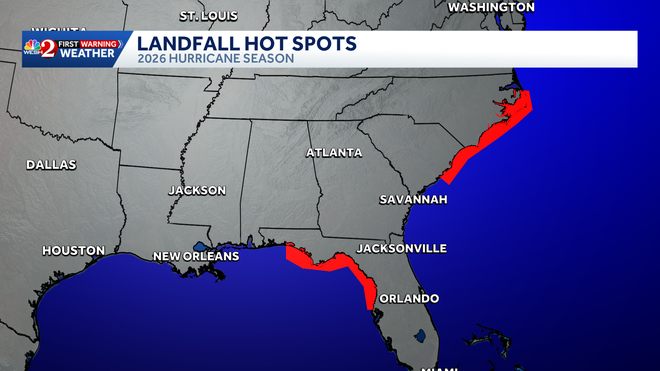
The first hotspot stretches from parts of the Florida Panhandle to just north of Tampa. The next hotspot covers parts of the Southeast Coast, from north of Charleston, South Carolina, to the Outer Banks of North Carolina.
The chance of direct impacts is lower, or closer to average, for the rest of the U.S. coastline. However, all locations need to monitor any developing tropical system.
2026 WESH 2 Forecast
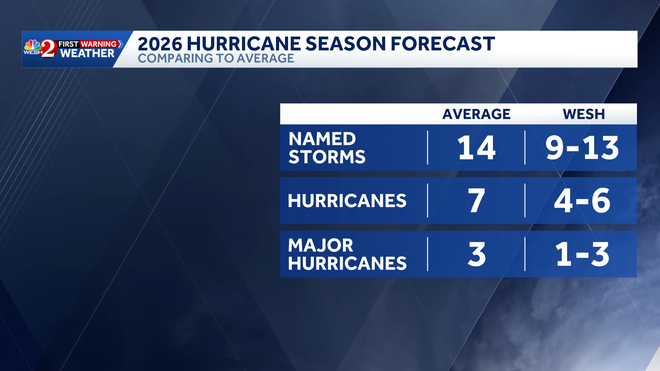
The WESH 2 2026 Atlantic hurricane season forecast calls for a below-average hurricane season.
- 9-13 named storms
- 4-6 hurricanes
- 1-3 major hurricanes
- Below average ACE
Despite the numbers above, please remember that it only takes one storm impacting your area to make the season active for you. Always be ready during hurricane season!
An average hurricane season sees 14 named storms, seven hurricanes, and three major hurricanes.
Coming Soon
Over the next several weeks, we will add our detailed timeframes of when tropical systems may develop and track during the 2026 season. The low-pressure areas we highlighted in the current weather pattern will continue to cycle, giving us a chance to sample and better extrapolate potential timelines.
The current cycle duration we have analyzed is longer than in past hurricane season forecasts. To help us provide the most accurate information, we will continue analyzing the pattern/cycle, so check back as we add this final piece of the forecast puzzle before the season starts.
Accuracy Check
A question we get all the time is how accurate is the WESH 2 hurricane season forecast issued months before the official start of the season? Let’s do an accuracy check on our forecast from the 2025 season.
Here is a look at the hits and misses from the 2025 forecast issued 3 months before hurricane season started.
- Above-average number of major hurricanes predicted
- ACE predicted above average
- Missed the number of named storms and hurricanes by 3
- Landfall of only tropical system outside of forecast hot spot
First Warning Weather
Stay with WESH 2 online and on-air for the most accurate Central Florida weather forecast.
Download the WESH 2 News app to get the most up-to-date weather alerts.
The First Warning Weather team includes First Warning Chief Meteorologist Tony Mainolfi, Eric Burris, Marquise Meda and Cam Tran.