The January detention of 5-year-old Liam Conejo Ramos in Minneapolis by federal immigration agents revealed how our government treats children as part of its policy of immigration management — based on fear and cruelty.
But before I saw the boy with his iconic bunny-eared hat and backpack, I had seen this movie before. In 2019, after several migrant children died in federal custody, the Trump administration contacted me — a pediatrician who had directed a children’s intensive care unit — and asked me to develop a medical screening protocol that would help Border Patrol agents identify seriously ill children.
I developed a protocol, but it was never adopted. But I was granted access to facilities where unaccompanied children were detained in what were appropriately described as “cages.” Children, including toddlers, were crowded into chain-link enclosures with mattresses on the concrete floor, thin blankets, no toys, no privacy. Many were crying. Some just stared, hands outstretched to anyone who walked past. It was truly heartbreaking.
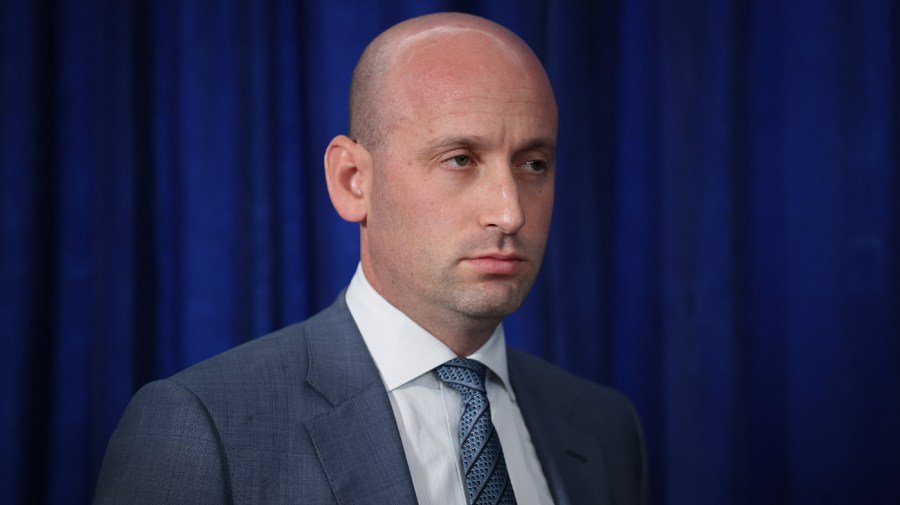
This was part of the immigration management agenda whose chief architect was Stephen Miller, whom President Trump had appointed in 2017 as his senior advisor for policy.
I thought of Miller, now deputy chief of staff to the president, and the children currently in federal custody, when a federal judge in San Antonio ordered the release of Liam and his father from the Immigration and Customs Enforcement detention facility in Dilley, Texas. It is, of course, a great relief that Liam is finally home with his mother and father. But hundreds of other children remain at Dilley and at Texas’s Karnes County detention facility — the only two ICE detention centers in the country that hold families.
Multiple parents held in the Dilley facility with their children have described food containing worms or mold. One child with a bleeding eye injury waited two days without medical attention. A mother told PBS that her previously cheerful toddler had begun hitting himself in the face. And at least two cases of measles have been confirmed there.
But the harm is not just physical. Prolonged institutional confinement is psychologically toxic for young children. Anxiety, depression, post-traumatic stress and behavioral regression are common consequences of persistent stress of detention for reasons that children find impossible to comprehend.
In addition to the family detention centers, approximately 2,400 unaccompanied minors are being held in shelters run by the Office of Refugee Resettlement. But as I personally observed during Trump’s first administration, the situation for unaccompanied children is far worse than for those kids held in detention with their parents.
That’s not the way it was supposed to be. When the Refugee Act of 1980 created the Office of Refugee Resettlement, the mandate was clearly humanitarian: to shelter these children temporarily with care and kindness. The idea was to place them, as quickly as possible, with vetted sponsors — usually parents or close relatives who have undergone background checks, fingerprinting and home evaluations. But that is not what is happening now.
Unfortunately, Health and Human Services Secretary Robert F. Kennedy Jr., presumably acting on White House directives, has installed ICE officials in leadership positions in charge of refugee resettlement. In October, the Office of Refugee Resettlement released an average of four children per day to approved sponsors. In early November, according to NPR and confirmed by three refugee agency officials, the agency’s leadership issued a verbal order to halt all sponsor releases. Reunifications have essentially stopped.
The design of this system — making family separation functionally inevitable while making reunification nearly impossible — bears Miller’s unmistakable fingerprints. Miller, the infamous architect of the 2018 family separation policy that removed some 5,500 children from their parents, was candid then about his reasoning when he said the separations would “prove to be a migration deterrent.”
The U.S. government operationalized a key immigration deterrence strategy long promoted by Miller and President Trump. But creating inhumane, medically and psychologically harmful conditions for children in federal custody is straight-up sanctioned child abuse by government.
These conditions are neither inevitable nor carved in stone. Congress has the ability to end systemic child maltreatment. Our representatives could restore the Office of Refugee Resettlement’s independence from ICE, prohibit the use of children’s case data for deportation targeting, require transparent reporting on detention conditions and demand the rapid release of unaccompanied children to appropriately vetted sponsors.
The children I saw in 2019 were waiting for someone to help them. The children at Dilley and the Office of Refugee Resettlement detention centers are waiting now.
Irwin Redlener, a pediatrician, is president emeritus and co-founder of Children’s Health Fund. He is also clinical professor pediatrics at the Albert Einstein College of Medicine and adjunct senior research scholar at Columbia University.
Copyright 2026 Nexstar Media, Inc. All rights reserved. This material may not be published, broadcast, rewritten, or redistributed.
For the latest news, weather, sports, and streaming video, head to The Hill.