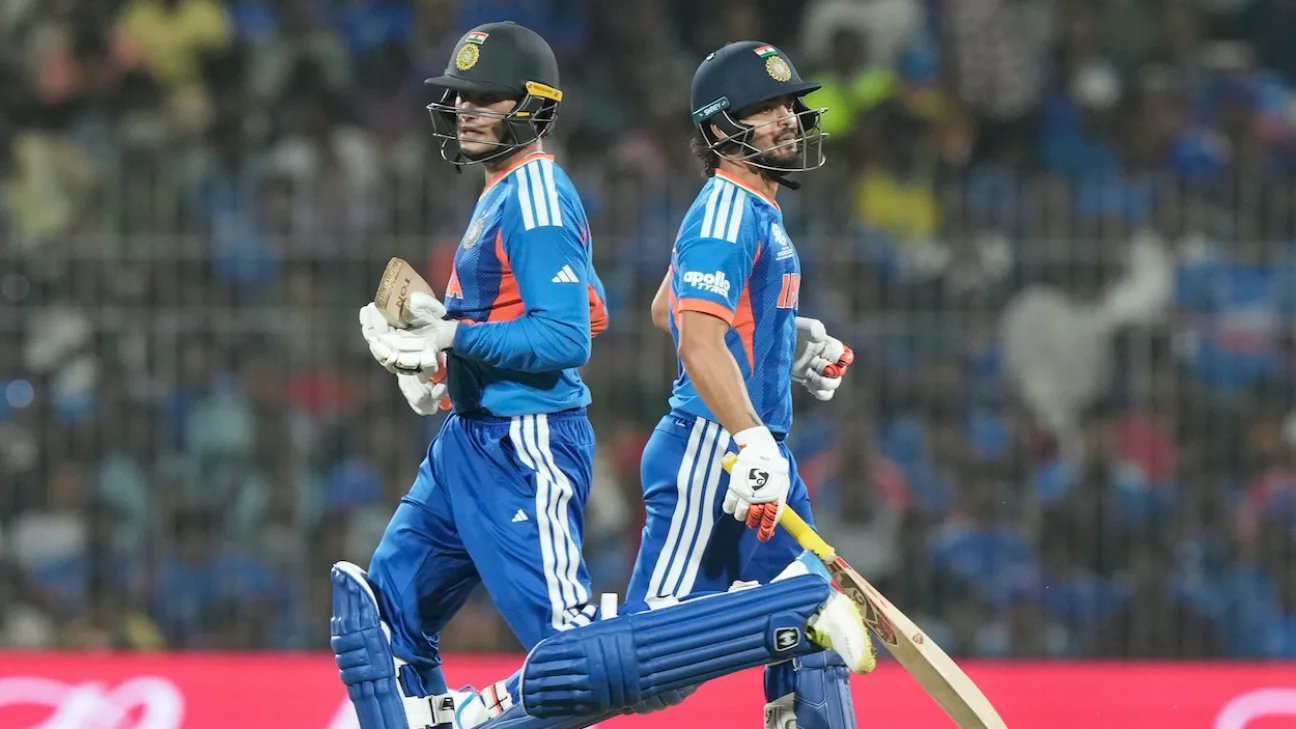
(To be clear at this point, this is just a bit of fun. India are not the evil Empire bent on submitting the rest of the galaxy to their will. No one would dream of suggesting that. And offspinners shouldn’t really be dismissed as furry creatures jabbering away in their cute little language with nothing in the way of weaponry beyond sticks and rocks and bits of twine. Don’t laugh, we’re being serious here.)
The thinking is, of course, pretty basic. Even having replaced Rinku Singh with Sanju Samson (partly because of the issue being discussed), India have a high number of left-handers in their batting order – five of the top eight – and offspinners turn the ball away from left-handers. This is classic match-ups territory, a ready-made plan that the data analyst barely even has to put in the microwave.
No matter that, post-R Ashwin and a few others, specialist offies are a dying breed. Offspin may be defiantly unsexy, but it is a skill that anyone who has ever rolled their arm over can have a go at. It’s just turning the doorknob, innit? One of the first things a child attempting to get into off-bounds parts of the house learns to do.
And if a job’s worth doing, it’s worth getting a batter to do it (however badly). As a way of quantifying this, our stats team looked at all the spells of one and two overs in this T20 World Cup. Among two-over spells bowled by spinners, offspin accounted for nearly half (46.43%), and close to two-thirds (63.89%) of one-over spells. (See table)
All of which has led to a rogues gallery of right-arm fingerspin being launched at India from as early as the opposition captain dares – from have-a-go heroes like Salman Agha and Gerhard Erasmus (whose repertoire of low-slung, long-distance skidders first piqued attentions with a four-for in India’s second game), to the allrounders, Saim Ayub, Sikandar Raza and Will Jacks, classic part-timers like Aiden Markram and Colin Ackermann, and even proper spinners like Usman Tariq (who barely counts) and Aryan Dutt.
What is perhaps more remarkable is that it has worked (or at least worked in the discrete sense: India are still in the final, after all). No team at the tournament has had more dismissals against offspin than India (15), and no team has a worse average (15.87). Among those that reached the Super Eight stage, no team has seen their batters score at a slower rate (120.20).
(Basically, if it all goes wrong, don’t blame us.)
Enter, Cole McConchie, a 34-year-old middle-order batter for Canterbury. All the best heroes come from humble origins, traversing their narrative arc to emerge centre stage at just the moment when destiny calls – and what could be more humble than playing domestic 50-over cricket in New Zealand, as McConchie was before being called up as an injury replacement for this World Cup?
McConchie knows the drill. He can bowl in the powerplay – as he did in the semi-final against South Africa, when he dismissed two left-handers, Quinton de Kock and Ryan Rickelton, in his only over. Okay, so Canada’s Yuvraj Samra slapped him around to the tune of 29 off 12 balls faced earlier in the competition, but he was only just off the plane then. And besides, our hero needs to have experienced adversity.
The Black Caps/Rebel Alliance have their standout leaders: Mitchell Santner with his Jedi calmness, Matt Henry as the gunslinging Han Solo character. Jimmy Neesham could probably play Jar Jar Binks. But they are going to need everyone to do their bit in Ahmedabad. When David takes on Goliath, he knows to bring his slingshot. And when you’re in a struggle to overthrow India’s planet-killing batting line-up, you’d better have an offie or two at hand.
Come on, New Zealand. They know you’re going to do it. We know you’re going to do it. Put your faith in the Ewoks. And don’t anyone say, “I’ve got a bad feeling about this…”
With inputs from Shiva Jayaraman
Alan Gardner is a deputy editor at ESPNcricinfo. @alanroderick