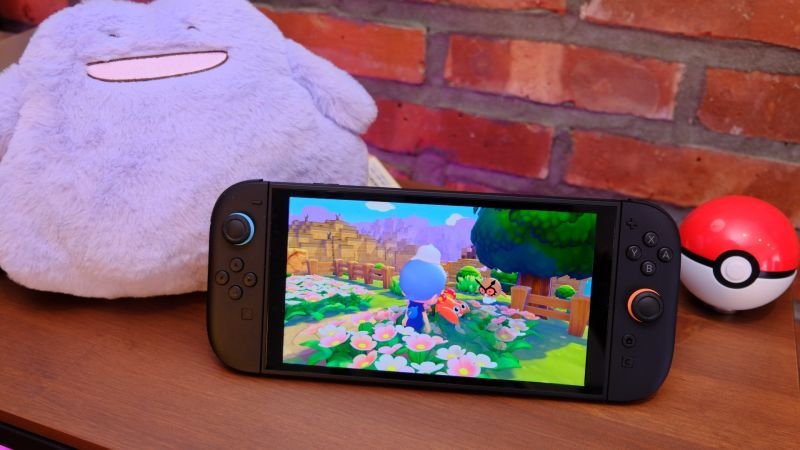
This week, the newest game in the Pokémon franchise arrives with the long-awaited debut of Pokopia. Earlier this year, our team took a look at all the upcoming launches from 2026 that our editors were looking forward to, and it’s no surprise that Pokémon Pokopia made the cut. Now as the game is slated to land on Nintendo Switch 2 consoles, I had a chance to explore the first Pokémon life-simulation game to see if it was worthy of landing on CNN Underscored’s The Watch List.

The first-ever Pokémon life-simulation game is here. In Pokopia, you’ll play as a transformed Ditto to rebuild a town from the ground up by befriending Pokémon, crafting items, farming ingredients and exploring new areas. Its charming narrative and expansive gameplay make it a must-play for fans of the franchise or as a Pokémon gift for the trainer in your life.
For much of Pokémon’s 30-year tenure in the video games space, just about all of the focus has been on catching and battling. Sure, there have been a few spin-offs here and there that let you try your hand at other kinds of interactions with Pokémon. But for the most part, if you’re picking up a game from the company, odds are it’ll be based on those two core concepts of encountering new creatures and leveling them up to defeat other trainers in combat.
Now, at long last, the franchise is entering the life-simulation genre with a game that feels worthy of such a long wait. It may have taken nearly three decades for Pokémon to lend its collection of beloved characters to the cozy gaming space, but the execution is brimming with far more polish and charm than you’d expect from a game that’s the first of its kind. In fact, Pokopia feels more like the latest installment in a long-running series than the company’s first attempt at this sort of game.
For those unfamiliar, life-simulation games are all about maintaining and growing a virtual life, and in this case, you’ll play as the Pokémon Ditto to work with the inhabitants of an island in order to rebuild it from the ground up. This very concept of being able to hang out, befriend and work alongside Pokémon is something I know many fans of the franchise, myself included, have been yearning for over the years, so it’s wonderful for me to report that the execution completely delivers on that premise.
There are so many reasons why this formula works so well for the Pokémon franchise, and ways that Pokopia elevates the usual gameplay over what you’ll find from other games like Animal Crossing, Stardew Valley or even Minecraft. But at its core, the premise really is as good as it seems. Everything from gameplay mechanics and music to animations, character personalities and dialogue comes together to create a game that many will find it hard not to spend hundreds of hours exploring.

One of the elements of Pokopia that lets it stand out from other life-simulation games — aside from just including Pokémon themselves — is its story. It’s hardly the first of its kind in the world of cozy gaming to include an overarching plot line, but many other titles in the genre are more like sandboxes in which to play around in rather than narrative-driven, open-world titles. Pokopia manages to deliver an experience that perfectly balances the two, allowing you to explore, craft and build at your own pace while also providing some structure to keep you focused on more than just the endless possibilities of expanding your island paradise.
Pokopia’s main story revolves around taking on the role of Ditto, a pocket monster who can transform into other characters — Pokémon and human alike. In this setting, you’ll take on the appearance of the latter in hopes of rebuilding a ruinous island that’s scarce with Pokémon and entirely void of mankind. You’ll accomplish this by completing requests given to you by the new residents of your island. These can be as simple as missions to feed a Pokémon a specific berry to make them happy or as complex as multi-hourlong adventures to revert a desolate, cloud-covered harbor back into a sunny, Pokémon-packed seaside town. In between those extremes, you’ll build homes for your islands’ residents, farm ingredients, plant flowers, craft furniture, terraform the very ground you walk on and uncover hidden lore about why there aren’t any humans around.
It’s that final piece of the narrative that elevates what would otherwise be a fairly basic story to fix up a dilapidated island. Throughout hours of exploring and crafting, you’ll find notes, photographs and other relics of a time where humans inhabited the world alongside Pokémon, or hear directly from the Pokémon in your town to uncover the events that drove humanity away. It’s one of the first games in the franchise to completely bypass the usual focus on trainers, with a story exclusively featuring Pokémon themselves. It means you’ll actually talk to the different characters, all of whom have unique personalities that are quite fun to interact with.
As you uncover lore about trainers of the past, nefarious Team Rocket schemes and natural disasters that seemingly drove Pokémon into hiding, you’ll travel between several areas on the map. As missions — not to mention more Pokémon with their own personal requests — start to pile up, there ends up being a lot to manage in the game. So while Pokopia lacks levels in a traditional sense, these segmented sections of the island are the next best thing, helping to avoid being overwhelmed by these stacking requests.
Moving from the game’s starting location of the Withered Wasteland to other areas, including Rocky Ridges and Bleak Beach, means you can temporary forget about those old projects and focus on a new set of challenges. Journeying to new places provides not only new game mechanics — how electricity works, how to cook ability-altering meals and more — but new area-exclusive resources, Pokémon and abilities.

Alongside Pokémon you might have discovered during your previous journeys through Kanto, Hoenn and other regions through the years, Pokopia features some entirely new takes on classic characters. Right off the bat, you’ll be introduced to Professor Tangrowth, an inquisitive, lab-coat-wearing version of the grass-type Pokémon Tangela from the original games. Their scientist-like curiosity helps guide you through the game’s narrative, and allows you to meet other entirely new versions of Pokémon.
Others include Mosslax; a moss-covered Snorlax, Peakychu; a Pikachu without their electric spark and Chef Dente; a Greedent with culinary ambitions, offer new takes on classic designs many Pokémon fans have come to know over the years. Each of these unique characters are making their exclusive debut to the Pokémon franchise in Pokopia have such fun designs, as well as charming personalities that make the game that much more enjoyable.
Life-simulation games, especially more recent additions to that genre, have a reputation of being made for online play with social elements in mind. There’s plenty of charm in that too, as being able to build your own little world and then invite friends to come hang out is about as compelling of an online experience as they come. But as someone who prefers single-player titles, I’m thrilled Pokopia is a game you can enjoy playing entirely on your own.
It still has online elements that expand the gameplay into a more social realm, but the core mechanics make it worth playing through even if you don’t plan on journeying to explore a friend’s island. The best part is that you don’t even need internet access to play the game, meaning you can build your island while away from your home Wi-Fi. As someone who relies on the subway system in New York City to get around, I can’t wait to spend time playing this game on my daily commutes.
I also particularly love that it fits in with a variety of gaming habits. Pokémon Pokopia is very much a game you can play at your own pace, which is to say I never felt compelled to rush through the story. In fact, the game purposefully makes you wait for some things, with a real-time day/night cycle that means growing plants and building homes takes real-world time to complete. It also means gameplay sessions can be quick check-ins see if a project has finished, or a several-hourlong quest to explore a new area. It’s just as ideal for those who want to pick up a game and play for 30 minutes as it is for someone who prefers more extensive hangouts with the inhabitants of their island.
There’s also lots of variety in how you spend that time. You could simply rush through uncovering the mystery of why the humans have disappeared, or you could just spend time perfecting the look of your island through meticulous crafting and building. Maybe you fancy catering exclusively to your Pokémon companions’ needs by completing as many side quests as possible to raise their happiness levels. Whether you choose to dabble in them all or focus on just one at a time, they all ultimately overlap, so the game ensures you’re never stuck because you invested too much time on one task. It leads to gameplay that satisfies everyone from the type-A gamer to the more casual player and everyone in between.
Thorough mechanics bring your digital island to life
Pokopia is the first Pokémon spin-off in quite some time, and is also the very first life-simulation game from the company. Despite being a departure from the core games, I’m surprised by how expansive the mechanics of the game are for its first foray into the genre. On the technical side of development, the reason why Pokopia is as well-rounded of a game as it is is because of The Pokémon Company’s reliance on working with the development studio Koei Tecmo’s Omega Force team, which has a history of bringing intricate life-simulation games to life.
Beyond just who worked on the game, there are so many layers as to why Pokopia is filled with life — and more than just the fact that it’s a title brimming with Pokémon to meet and befriend. As I mentioned above, Pokopia features a real-time day and night cycle, which means that the time on your island reflects what time it is out in the real world. That level of realism isn’t uncommon for a life-simulation game, but in the case of this title, leads to satisfying moments of finally being able to harvest crops after waiting for them to grow, as well as having to wait for your Pokémon to help complete a day-long construction project. There’s also both crafting and terraforming abilities in the game that round out some of the usual life-simulation mechanics.
In addition to that overarching day/night cycle, Pokopia also features some more Pokémon-centric inclusions that have made it even more of a unique game to enjoy. The environment level feature is one of the main ways to advance through the game, and keeps tabs everything about the surrounding areas in order to monitor how the progress of turning the ruinous island into a Pokémon utopia. One of the bigger elements it takes into account is the happiness of the inhabitants, which you’ll have to maintain through completing various tasks. Some are as simple as feeding your friends, while others require giving them certain items, upgrading their designated homes or taking them on miniature adventures.
Speaking of the Pokémon’s homes, I have also fallen in love with the way that Pokopia introduces new creatures into your island. The game has a complex habitat system that allows you to create special areas suited for a unique roster of Pokémon. Combining a cluster of tall grass underneath the shade of a tree may summon a Syther, while setting up a campsite next to a palm tree will invite a Growlithe to your town. In the video above, I was lucky enough to find a Venusaur by placing a bed of flowers next to some water to create their preferred habitat. I have yet to discover all of them, but there are seemingly close to 100 of these habitats to find — and then build — in order to completely fill your island with villagers.
Some other noteworthy additions on the mechanics front include adjustable weather patterns that mean you can make it rain, as well as water physics that allow streams to flow in specific paths and generate electricity. Speaking of, a robust electric grid system means you can power lights, appliances and even certain Pokémon by placing windmills, furnaces and waterwheels around your town. The whole world is quite reactive to what you (and your Pokémon) do, and it makes the customization process of building out your island even more fun as you fix it up.
And because the game revolves around Ditto, Pokopia takes full advantage of the Pokémon’s signature transformation move. Everything from cutting down trees, watering plants, terraforming bedrock, moving heavy objects and tilling gardens can be done through learning a move from one of the Pokémon that you’ll befriend along the way. So alongside tasking your pocket monster friends to help with various tasks around your island, you can take matters into your own hands.
While life-simulation games aren’t known for having a story to complete, Pokopia does. The Pokémon Company contends that there’s around 30 hours worth of main missions to work your way through before you fully unlock the world, and in my experience, that seems to be a bit conservative. Sure, if you only prioritize tasks that move the narrative forward, you may be able to solve the mystery of why the world is in ruins. But spending any amount of time customizing your island or going on side quests will extend the runtime.
In my time with the game so far, I’ve skipped past countless side missions in order to prioritize getting this review finished. Even so, I’ve still managed to get sidetracked on several occasions to participate in my fair share of fun side quests. After all, who could say no to a Piplup asking me to take them on an adventure. All that’s to say, if you’re worried about Pokopia not being worth a $70 price tag from the time-to-completion angle, there is plenty of value just in the narrative of the game, with everything in the post game being a bonus in my book.

As much as I have enjoyed my time with Pokopia so far, there is one elephant in the room that I need to address; the game is only available on the new Nintendo Switch 2. Those of you with any edition of the first Nintendo Switch — the original, OLED or Lite variants — won’t be able to dive in and build your own Pokémon-filled island unless you upgrade to the second-generation version of the console.
As much as the staff at CNN Underscored have enjoyed our times with the Switch 2 since last summer’s launch, it’s a tough sell for me to sit here and tell you to go out and spend $449 for a new console just to play Pokémon Pokopia. That’s especially true considering that Pokopia’s gameplay isn’t all that intensive on the gaming console. It does run incredibly well on the Switch 2, don’t get me wrong. But it doesn’t feel like performance is what’s holding it back from landing on the previous-generation console. With a game that has such a large social component to it, I wish that I’d be able to recommend the game to more of my friends (and readers) who have yet to splurge on the latest and greatest from Nintendo.
It’s hardly a reflection of the game’s quality or value, and just the hard truth that if you still haven’t bought one of the new hybrid consoles, odds are Pokopia isn’t going to be the game that tips the scale. But if you have been looking for that one final game to finally push you over the edge, let me be the first to rave about Pokopia in hopes that it is enough to sell you on Nintendo’s second-generation experience.
Pokémon Pokopia has made quite a few adjustments that allow it to standout from other life-simulation games, and for the most part, those are welcomed chances that help the game feel unique. But one element of other games in this genre that I wish The Pokémon Company had adopted was additional variety in the characters that spawn on your island — and I mean this in two different ways.
The first is quite simple; I wish there was a larger representation of Pokémon from outside of the Kanto region. With 30 years of the franchise under its belt and over 1,000 different characters spread across the games, I was hoping to see more inclusions from other generations. This is hardly a dealbreaker, as fans clearly do love the classic 151 Pokémon. But with so many other creatures to include from later on in the company’s history, I’m sure many Pokopia players will be a little disappointed that their favorite pocket monster didn’t make the cut. I know that The Pokémon Company can’t please everyone, and including all 1,025 Pokémon was unrealistic, but I do wish there was little more variety from the newer generations of the franchise.
The second point I have to make is that many of the Pokémon you do encounter are seemingly written into the story. The further you get into the game, the more variety of characters you’ll run into, but I miss the charm that other games like Animal Crossing: New Horizons deliver where nearly all the inhabitants of your island move in at random. There are certain Pokémon with unique abilities or who play a specific role in the story that are essential, but even outside of those, many of the Pokémon you’ll meet in the first several hours of the game appear to just be the same. If you plan to play Pokopia entirely by yourself, this likely won’t be something you even notice — let alone have a strong opinion about. But if you’re playing with friends and are used to comparing unique assortments of villagers in Animal Crossing amongst each other, that experience is gone.
The habitat crafting dynamic does open up some variations thanks to the chance to have a rare Pokémon Company spawn, but aside from that, it feels like the characters in your copy of the game will be quite similar to your friends’ versions.

If you’ve ever wanted a life-simulation game with Pokémon in it, look no further. Pokopia delivers all that and more, so much so that I can say it drastically exceeded my expectations. The level of depth from the game’s mechanics should make this as compelling of a game as any for those who want a cozy title to sink hundreds of hours into for building their perfect little island oasis — just don’t go into this thinking it’s an Animal Crossing clone. There’s so much more to Pokopia than that, with mechanics that make it more like a digital box of Lego bricks than Nintendo’s other popular island-building title. And even if you aren’t the type to fine tune every little element of an island like this, I found the core story elements to be worth playing entirely on their own. Even if I wasn’t planning to continue playing the game to expand my island and play with friends, I was incredibly satisfied with exploring the areas for the first time, uncovering the narrative and hanging with the Pokèmon in the guided narrative.
And with Pokémon as a franchise celebrating its 30th anniversary this year, this feels like a love letter to fans who have been catching them all for decades. It’s just as fun for fans who have played every installment in the Pokémon video game catalog as it is for newcomers to this side of the franchise. Pokopia is inviting enough to fans who haven’t been interested in battling their way through a region’s trainers, so anyone who is into Pokémon for the cards, plushes, TV shows and other media will find something to appreciate with the title’s more laid-back approach to hanging out with the likes of Squirtle, Bulbasaur and Charmander.
So much charm elevates those gameplay proficiencies into what will likely be my favorite Switch game of the year. I was worried about the game’s $70 price tag — but it’s clear that this departure from the mainline Pokemon games isn’t just a pit stop — it’s a full-fledged game in its own right that I can’t recommend enough. Even if another games does end up coming along to dethrone Pokopia as my favorite release in 2026, I’m certain that it will remain my most-played title of the year.
CNN Underscored has a team of writers and editors with many years of experience in product testing, researching and recommending products, and they ensure each article is carefully edited and products are properly vetted. We talk to top experts when relevant to ensure we are testing each product accurately, recommending only the best products and considering the pros and cons of each item.
The writer of this article, senior deals editor Rikka Altland, has personally been reviewing all kinds of tech, gadgets and home goods for over a decade. She is a lifelong gamer and fan of all things Pokémon, and recommends the game after sinking over 30 hours into it.